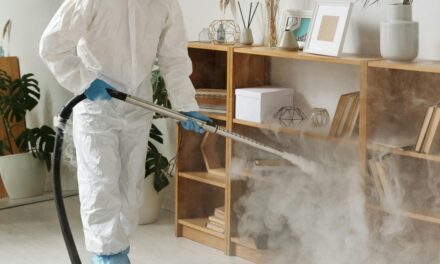
Have you ever walked into a room and instantly felt a thin, gray scent, even though the air looked clear? It’s a more frequent frustration than you might realize. How to remove smoke smell is one of the most asked questions worldwide, as smoke doesn’t just hang in the air; it actually settles into your house like a persistent and unwanted guest. This process of settling into your house is also known scientifically speaking as the thirdhand smoke (THS), a complex mixture of chemicals that remain and re-emit in dust, surfaces, and materials for months.
So, if you are looking to truly remove smoke smell, you will have to go beyond cleaning the air and focus on deep cleaning the surfaces that are constantly feeding the odor back into the room. Since most people are unaware of this, we would like to share some effective and safe ways to restore your home’s freshness.
Contents
Why is it so hard to remove smoke smell from indoor spaces?
One of the main reasons why removing odors is so hard is that your home is essentially a giant sponge. For instance, when someone smokes, or there is a fire outside, chemicals like nicotine and aromatic hydrocarbons don’t stay as gases; they stick to fabrics and embed deeply into drywall and flooring—known as deep reservoirs.
According to the Lawrence Berkeley National Laboratory research, these reservoirs create an adsorption and desorption cycle, where the surfaces absorb the smell when it’s heavy and slowly release it or breathe it back out as the air clears. This is why that quick spray of perfume never works, it only masks the scent rather than removing it. If you want to remove smoke smell permanently, you have to physically disrupt this cycle and neutralize the chemistry behind them.
1. Target the invisible surface reservoirs
The first and most important step to remove smoke smell is a physical cleaning. While you might be thinking to buy a fancy machine, a research study at a smoke-contaminated test house found that vacuuming, mopping, and dusting physically removed surface reservoirs more effectively than probable air cleaners.
Always start by cleaning hard surfaces like ceilings, walls and floors. Instead of using harsh chemicals like ammonia, which can be irritating to skin and lungs scientists recommend a two-step approach. First, use an alkaline cleaner (soap solution) to loosen the bound chemicals, followed by white vinegar. Thanks to its acidic properties, the white vinegar reacts with the nicotine to turn it into a stable salt that is much easier to wash away for good. Remember to use a vacuum with HEPA filter, as it helps to capture contaminated dust that often acts as a major source to remove smoke smell from your house.
2. Deep clean your fabric repositories
Fabrics are one of the things that people ignore, but they are the primary hiding place for smoke pollutants. A study from the University of California, shows that materials like cotton and terry cloth are long-term repositories that soak up more nicotine compared to other synthetic fabrics. If you are thinking that a light dusting will help you remove smoke smell from your curtains, carpets and cushions—you are mistaken.
Currently, the most effective method is professional-grade steam cleaning using enzymatic preconditioners. However, it is important to highlight that based on a paper in the International Journal of Environmental Research and Public Health, cotton is easier to clean, while synthetic polyester fibers might require a bit of heat or high humidity to fully release the trapped chemicals during the cleaning. Also, some studies confirm that washing the item multiple times is helpful, as most of the residue comes off in the first wash, but it takes subsequent cycles to reach into the fibers.
3. Turn your home into a botanical bio-filter
Sometimes seeking for nature could be the most efficient answer as potted plants aren’t just for decoration; they are ideal tools for a process known as “phytoremediation”, where living plants help remove toxins from the air. A famously NASA study, demonstrated that plants could successfully remove airborne pollutants in closed environments, but further investigation has confirmed that species like Golden Photos and Spider plant are particularly good at absorbing the types of Volatile Organic Compounds (VOCs) found in smoke.
Moreover, the leaves from these plants and the microorganisms in their roots help degrade toxic pollutants into non-toxic ones. So, if your are planning to maximize this effect and remove smoke smell more efficiently, place several of these plants in the affected room, where they can work along with the airflow, and achieve stable removal rates for smoke pollutants in around 6 hours.
4. Master the art of strategic ventilation
Ventilation is simple, yet effective, and it could become your best friend but only if used correctly. Opening windows shifts the equilibrium in the room, as the airflow will release the surface reservoirs trapped gasses so they can be swept outside. Nonetheless, once the house is closed before the surfaces are cleaned the air will quickly refill with the smell.
Thus, the best strategy to remove smoke smell is to open all doors and windows during and after your deep cleaning process. For additional help, you can use portable air cleaners with both a HEPA filter for particles and a thick activated carbon filter specifically designed for gaseous odors. Always, keep ins mind that cleanliness and ventilation are generally the great agencies for odor removal.
5. Neutralize with safe, organic chemistry
Finally, the last step to remove smoke smell is to use a safe chemical catalysts to break down any remaining odor molecules. Recent research has explored the effectiveness of eco-enzyme as an agent to eliminate cigarette smoke odor. Eco-enzymes are fermented liquids made from fruit peels that contain natural enzymes like lipase and amylase. These enzymes act as a catalysts or like a chemical pair of scissors to break down the odor-causing molecules.
For example, in one study an eco-enzyme spray at 1:3 concentration was able to make the smell of cigarette smoke completely imperceptible to a panel of testers. Likewise, scientific research also recommends placing bowls of activated charcoal in your house or a room is an effective and inexpensive method to deodorize and remove smoke smell, because it concentrates gases and vapors in its porous structure. By following these steps you can effectively remove smoke smell and restore your home’s air quality without the need of using toxic chemicals.